WASTE MANAGEMENT • RESOURCE RECOVERY

Understanding Waste as a Resource

Different types of waste can be managed responsibly, recovered and transformed into useful resources.

From Waste → Resource → Opportunity

🌱
Wet Waste Organic Resources
→
♻
Dry Waste Recoverable Materials
→
💼
Value Resources & Opportunities
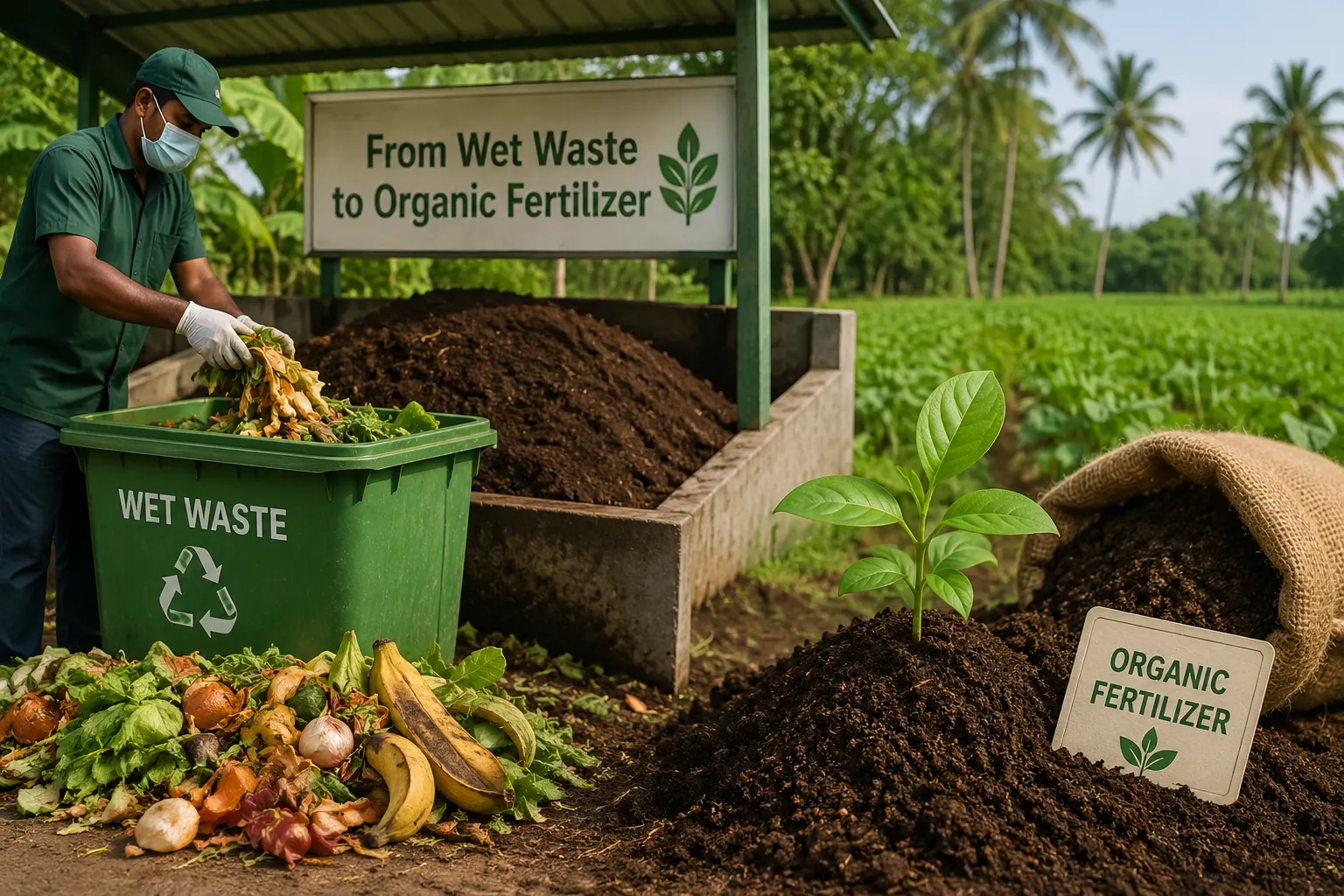
Wet waste being processed into organic fertilizer
🌱
Organic Resource Supporting Agriculture
01 • WET WASTE

From Wet Waste → Organic Fertilizers

Wet waste can be transformed into organic resources that support agriculture and contribute to a healthier environment.

🌱
Waste as a Resource

Instead of treating biodegradable waste simply as something to be discarded, it can be processed and converted into useful organic fertilizer.

01 Collect
→
02 Segregate
→
03 Process
→
04 Fertilizer
02 • DRY WASTE

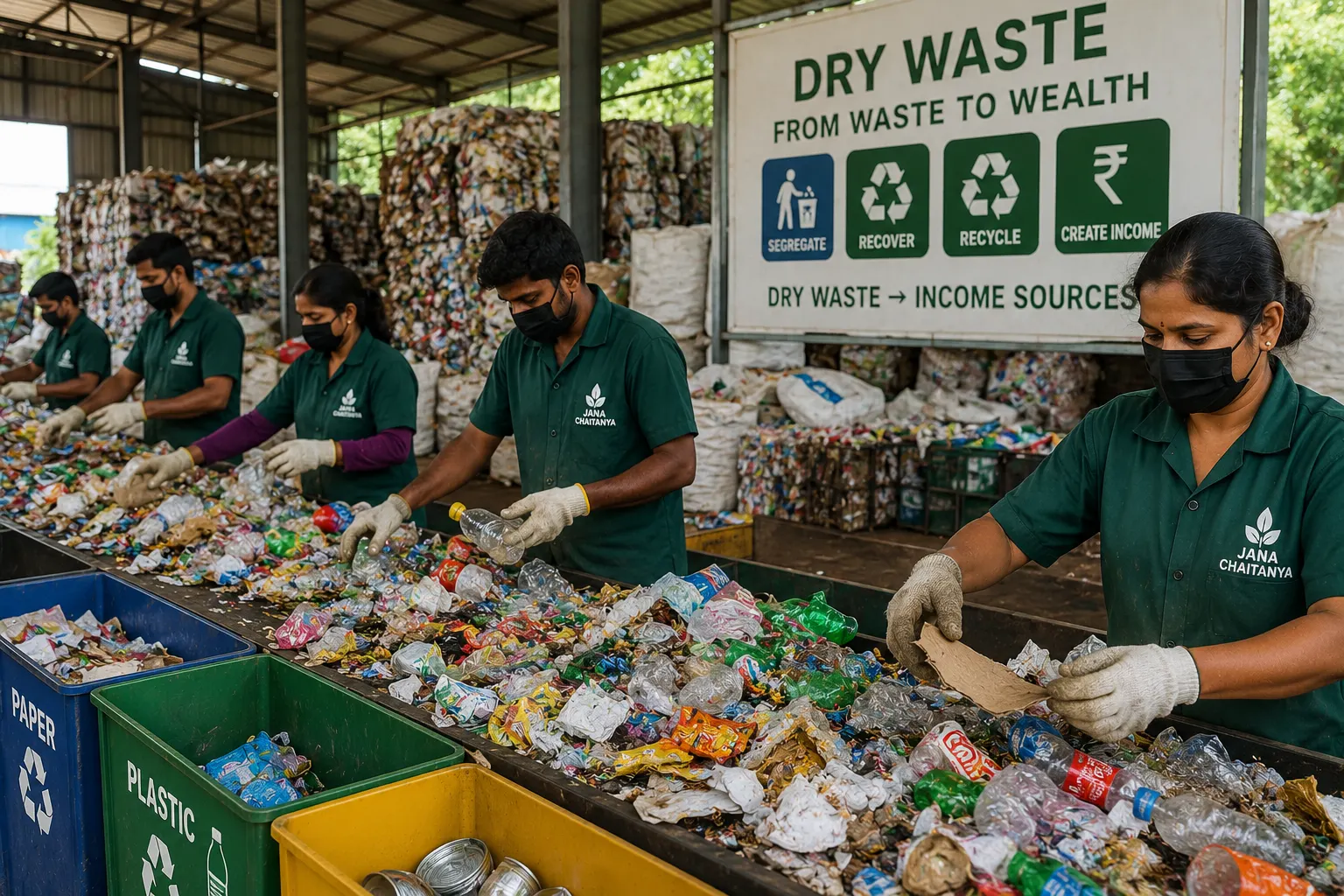
From Dry Waste → Income Sources

Dry waste can be separated, recovered and reused to identify valuable materials while creating potential income opportunities through responsible waste management.

♻
Waste Can Create Value

Recoverable materials such as paper, cardboard, plastic, metal and other recyclable materials can be separated and directed towards recycling and recovery.
📄 Paper
📦 Cardboard
♻ Plastic
⚙ Metal
01 Segregate
→
02 Recover
→
03 Recycle
→
04 Create Value
Indian workers segregating dry recyclable waste
♻
Recovered Materials Creating Value from Waste
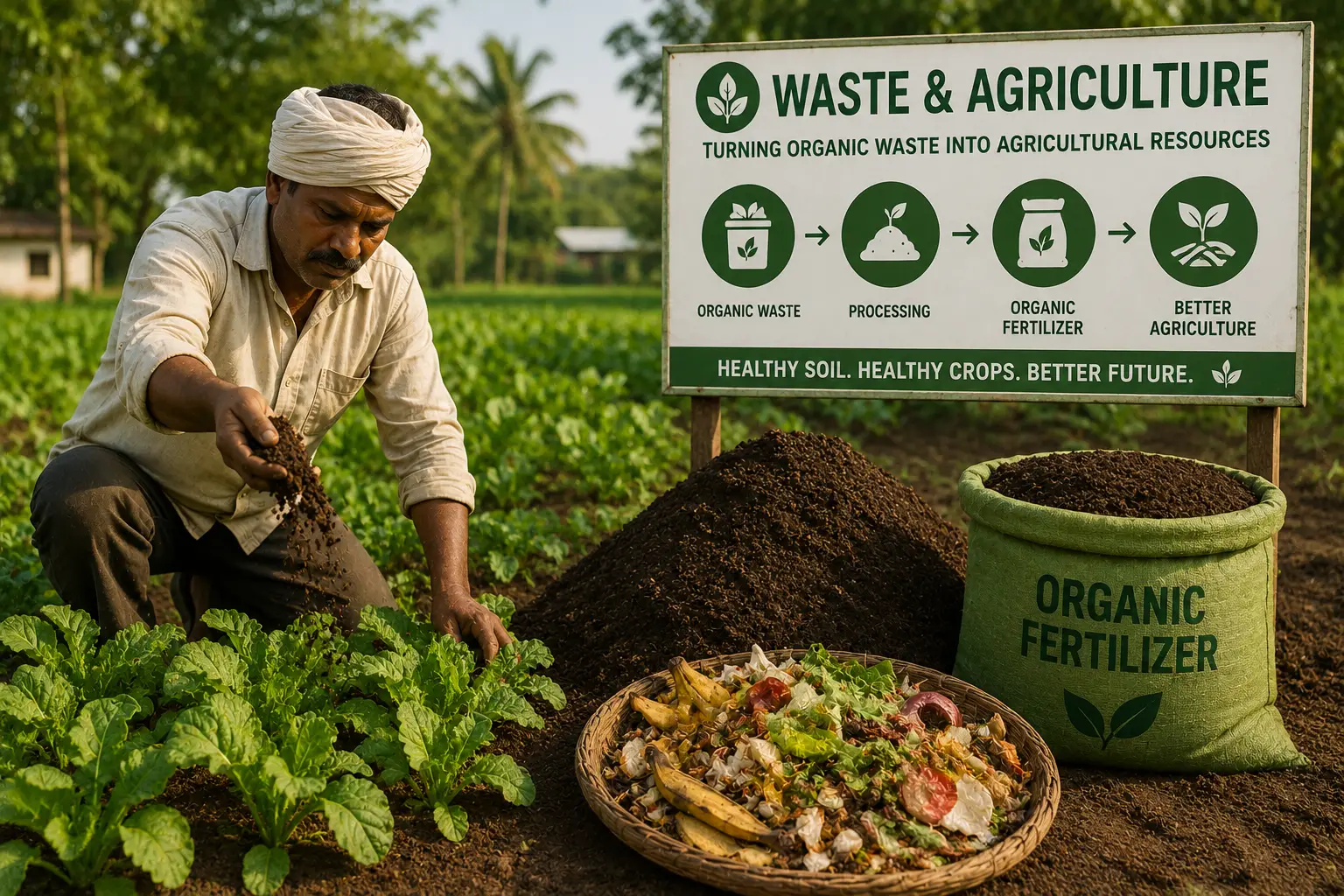
Organic fertilizer being used in an Indian agricultural setting
🌾
Waste & Agriculture Supporting Sustainable Farming
03 • WASTE & AGRICULTURE

Turning Organic Waste into Agricultural Resources

Organic waste can be managed as a resource rather than simply discarded. Through responsible processing, it can contribute to the creation of organic fertilizers that support agriculture and help protect the environment.

🌱
From Waste to Agricultural Resource

Our approach recognizes the connection between responsible waste management, environmental protection and agricultural development.

01 Organic Waste
→
02 Processing
→
03 Organic Fertilizer
→
04 Agriculture
🌿

Protecting our surroundings while creating resources that can contribute to agricultural development.

05 • WASTE SEGREGATION

Waste Segregation Process

Proper segregation is an important step in responsible waste management. Separating waste at the source helps identify materials that can be processed, recovered, recycled or converted into useful resources.
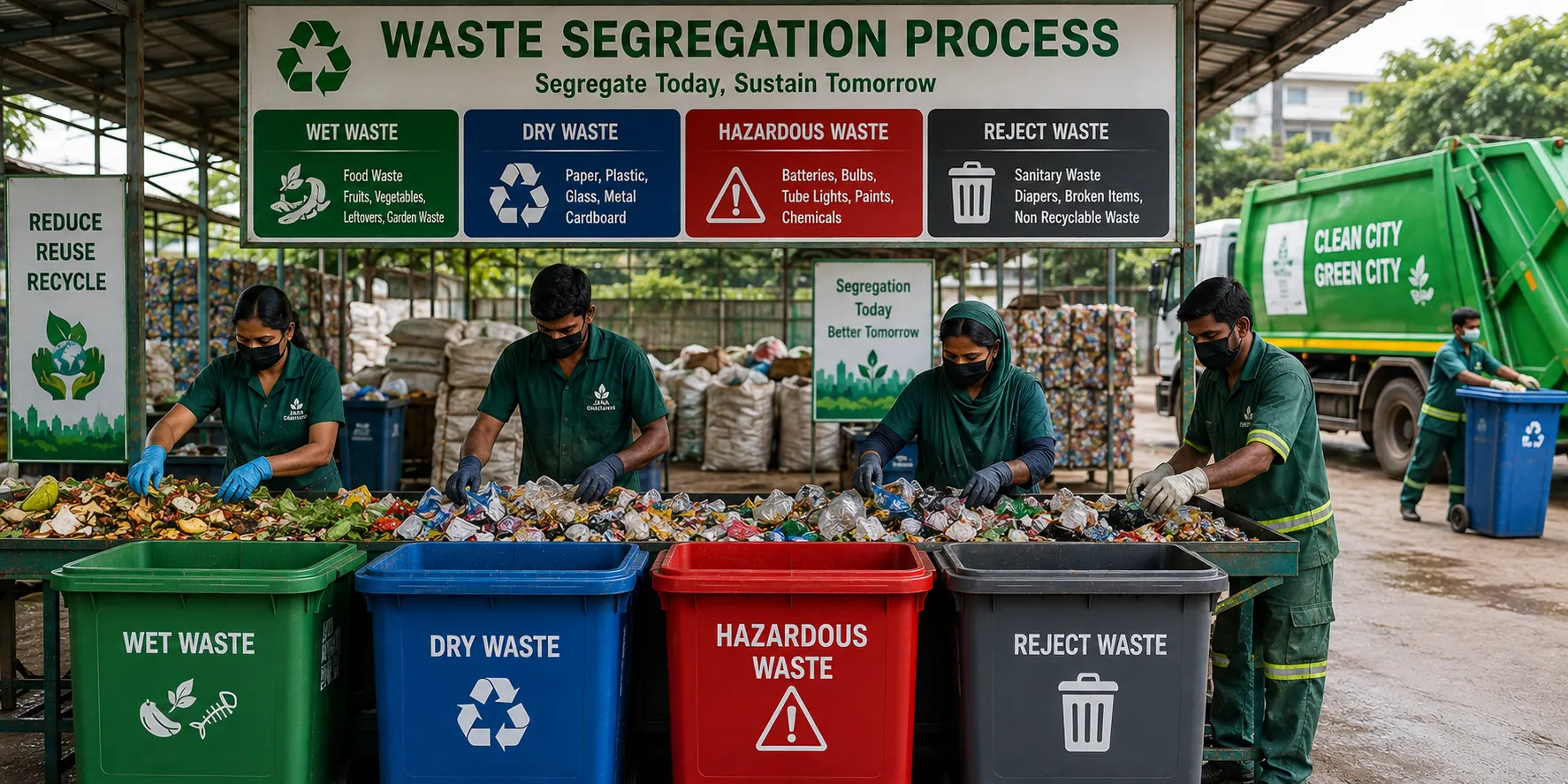
Waste segregation and collection process in an Indian setting
01 Separate Waste at source
→
02 Collect Responsibly
→
03 Recover Useful materials
→
04 Create Value Resources & opportunities
♻
Segregation Makes Recovery Possible

When wet, dry and other waste streams are handled separately, valuable materials can be identified and directed towards appropriate processing and recovery.

Share with